TALK: the self-editing process that leveled up my writing

in this post
If you’re getting 528 comments per draft when you turn in your writing, chances are your self-editing process is bad… or nonexistent.
Six years ago, I thought I was a writing queen. I worked as a content developer for a small FinTech in Lagos, Nigeria, with barely any checks and balances as to what clear content should read like.
Fast forward to when I started working with international content agencies and brands, where clarity was a non-negotiable. After fielding many negative comments, I quickly realized the gaps in my writing. If editors and clients were getting headaches, wouldn’t the readers, too?
So, I built my own self-editing checklist. Six years and many improvements later, that checklist became the TALK Self-Editing Framework.
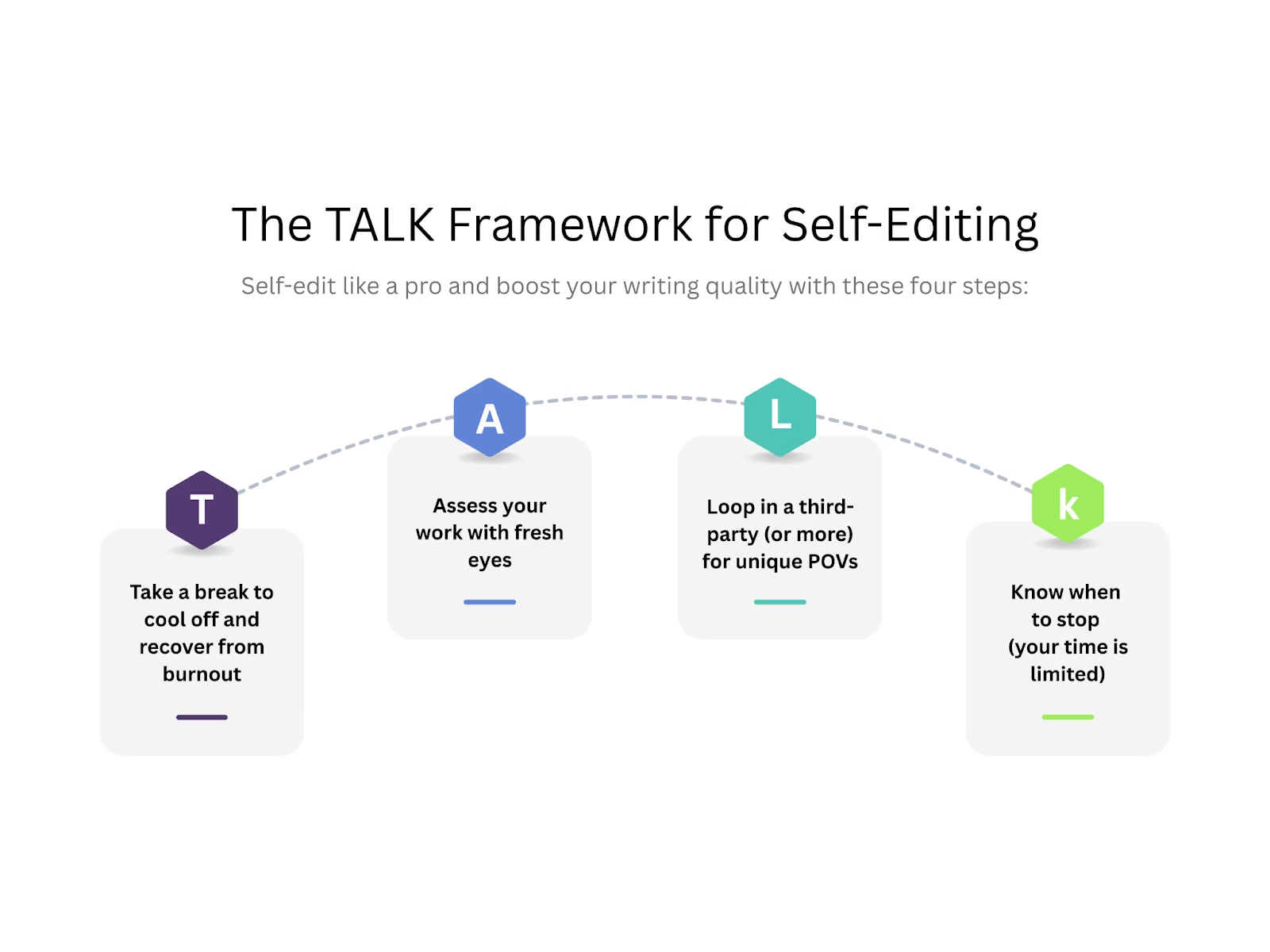
Follow it closely, and you won’t have to fumble through negative editor feedback, error-filled posts, or client churn like I did early on.
t: take a break to cool off
Stepping away from a piece you’ve spent a while writing is a good way to clear your head and come back stronger.
Depending on my timeline and pending deliberables, here are some ways I usually spend my breaks:
- Working on something else, like The Profitable Marketer, my newsletter for content marketers
- Taking a walk, a power nap, or a shower
- Making a quick meal or light snack
- Ticking some other task off my to-do list
The break doesn’t need to be long. A few minutes away can be the difference between only spotting minor typos vs. finding logic gaps and awkward phrasing.
a: assess your work with fresh eyes
After you’ve cooled off, look at your work with fresh eyes to spot gaps you might have missed and make sure your draft meets editorial standards. This is the most important element of the self-editing process, as it’s where you do the real work.
Here’s how I do it:
1. Take a break and come back later.I’m repeating the taking a break point here because it’s just that important.
2. Read the entire piece from start to finish
- Assess sentence flow and fix typos
- Break up run-on sentences and paragraphs
- Rework unclear or rigid phrasing and match your style guide
- Include visual breaks (images, tables, bullet points, and quotes)
3. Check internal and external links
- Ensure all links are accurate and don’t link to error or 404 pages
- Use anchor text that reflects the content of the linked pages
- Don’t link to external data older than three years, except for general, mostly unchanging facts such as psychological principles
4. Review the introduction and conclusion
- Check that the intro has a clear hook (stat, relatable phrase, or target audience pain point), transition (a segue), and thesis (the article’s promise)
- Ensure the conclusion emphasizes a clear next step for readers and includes your desired CTA (free trial, newsletter, demo, signup).
5. Draft three or more alternative title ideas
- For each title idea, consider the keyword and how the piece will address the reader’s pain point
- Highlight your favorite title idea and why you think it works best
6. Review previous feedback
- If you’ve worked with the client or editor already, check their last feedback to you. What did they commend? What did they flag? Reflect those in your new draft.
- If it’s your first time, review your work against their already published content or specific samples they might have shared in the content brief. This is a good way to check the standard they expect in your draft.
7**. Re-read the entire piece** and follow everything in step 1 again to catch issues you may have missed the first time.
Pro tip: Copy this self-editing checklist into a fresh doc and use it before submitting or publishing each new piece.
l: loop in a third-party (or more) for unique POVs
Asking other people to review your piece is another way to reality-check your arguments and expose blind spots.
Here’s who I ask for feedback:
- In-house subject matter experts (SMEs) and my content colleagues
- SMEs whose insights are already featured in the draft
- Past coworkers still into content writing or editing
- Friends or family members who match my target reader profile
Whenever I have the time, especially for high-stakes pieces, like interview test projects, I also like to DM writers within my network or professional communities for help.
Here’s a quickfeedback request template you can use:
“Hi [reviewer first name]. My name is [your name], and I’m working on a piece about [article topic] for [client company]. It’s like 90% ready, but I was hoping you might have a few minutes to read it and share your thoughts.
I really want to make a good impression, and I’ve learnt a lot from your [something that makes them a good reviewer, e.g., writeups, LinkedIn posts, newsletter, community contributions] in the past, so I know you’re just the right person to help.
No pressure, but here’s the draft link [link] if you’re up for it. Feel free to comment your thoughts in the doc, text them here, or send a voice note. Thanks in advance!”
–
Heads up, this step takes some time, but it’s worth the extra effort because you might even get a valuable quote from your reviewers to add to your piece in the process.
k: know when to stop
You could go on and on trying to find more ways to tighten your draft, but once the fundamentals are covered, done is much better than perfect. You only have so much time, and there are a million other tasks and drafts to finish.
So don’t overthink it. Follow the right steps and hit publish. You can update later if the need arises.
bonus: tools to automate your self-editing process
Alongside my trusted eyes, I use a few tools to sweep through my drafts. My stack includes:
- Grammarly and Hemingway App for catching grammar errors, cutting fluff, and improving readability.
- Clearscope , Fraser , or Surfer for search-optimizing articles and boosting their ranking and traffic potential.
- Claude , ChatGPT , or Perplexity for creative sparring and research support.
As a writer, off days are inevitable. To make them fewer and farther between, use my TALK self-editing framework, and your drafts will be easier to edit, smoother to read, and better positioned to perform in search results. You’re welcome!