my no-ads content distribution strategy
In May 2025, I launched my professional website, but even then, I was still working to grow authority and visibility. Without domain strength or an existing audience, I knew my content would take time to rank on its own. To get it in front of the right people, I needed a content distribution strategy on a budget, so I built one.
In this article, I’ll share how I build momentum before hitting publish, repurpose content into multiple formats, and distribute it without relying on paid ads.
Before publishing: How I get eyes on my article before it goes live
I don’t wait till publishing day. I build early visibility by teasing the content and sharing the behind-the-scenes of my writing process.
This early engagement gives people a reason to care about your blog before it even exists. It helps you validate your angle, build anticipation, and involve your audience in the process. You also subtly train your network to expect useful content from you and not just “my new article is out!” posts.
Pre-publishing posts on LinkedIn or other social
Before I hit publish, I treat my article like an open project. I share parts of my research process or struggles I faced while writing certain sections.
It could be a screenshot of my draft with a relatable story that ties into the theme or a quick question to stir conversation.
Here’s an example with a LinkedIn carousel of my research process:
These kinds of posts:
- Get people involved and curious
- Build the case for your blog before it’s live
- Help you gather responses you can feature or reference later
I received a few comments from people sharing their own research process, along with this question asking what I was writing about:
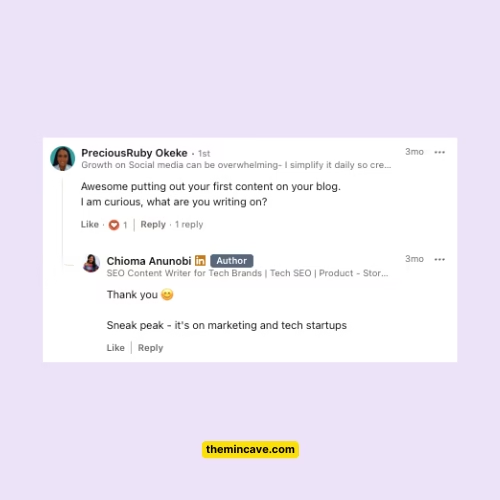
In anticipation of this article (yes, the one you’re currently reading) going live, I made a LinkedIn post to share the inspiration behind it, specifically, the struggles content writers face with content visibility. Carrying my audience along the writing process is something I now enjoy, because the story behind the content is also important.
While LinkedIn is where I show up the most, this approach also works on other platforms like X, Threads, Instagram, or Bluesky. Just make sure to adapt the format to fit the platform. A carousel might work well on IG and LinkedIn, while a casual thread could perform better on X.
The goal is to build interest and anticipation for what you’re writing, instead of just showing up when the article is live.
Asking peers or senior colleagues for feedback
I like to share my draft with a few people to get a fresh pair of eyes on my work.
Here’s a screenshot of a message I sent to a trusted person, asking for their feedback on my article:
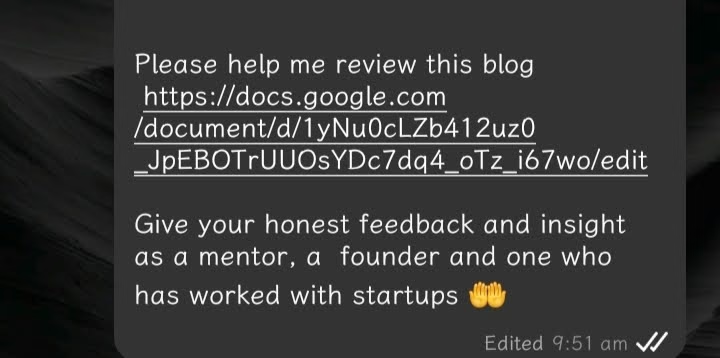
Doing this helps me:
- Validate my writing angles
- Spot gaps or confusing parts
- Seed future engagement organically. People tend to engage more with content they had a stake in
- Strengthen relationships by showing trust in their input.
Asking for insight in communities
One underused but effective way to build early momentum for an article is by asking micro-questions in writing or industry-specific communities ahead of your publishing date. This works well for content with opinion-based angles.
Keep the question open-ended and conversational. For example:
“I’m curious, how do you distribute content without paid ads? What’s worked for you?”
If you end up weaving their answers into the piece (with credit), let them know when the article goes live. People are more likely to read and share something they contributed to, even in a small way.
Applying SEO + AEO principles from the start
While writing for humans is always my first priority, I also apply basic on-page SEO and AEO (Answer Engine Optimization) principles early in the process. This way, the article is both searchable and relevant. One key strategy is writing a meta description that directly answers a real question my target audience would type into Google.
For example, when writing about “9 Effective Ways to Avoid Marketing Mistakes in Tech Startups,” I thought like my reader: “How can a startup founder effectively avoid marketing mistakes?”
I studied search intent and People Also Ask results to shape my messaging. Then I wrote a meta description that:
- Directly answered the article’s core question
- Reflected on how my audience phrases their queries
- Used my primary keyword naturally
Because the article and description spoke clearly and directly to my audience’s needs, it was cited in AI Overviews..
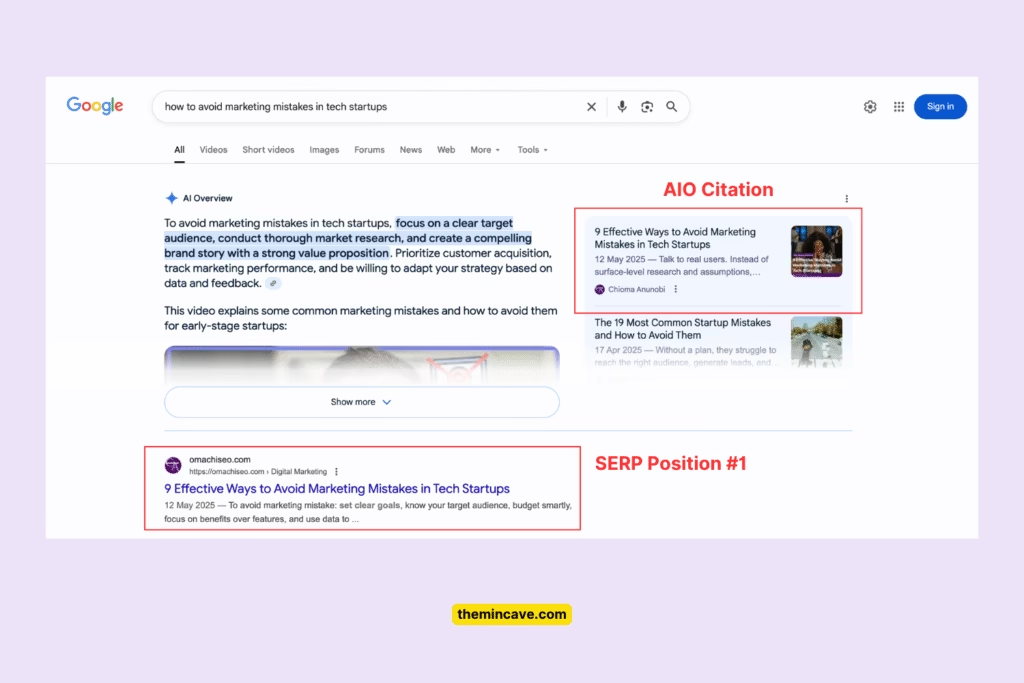
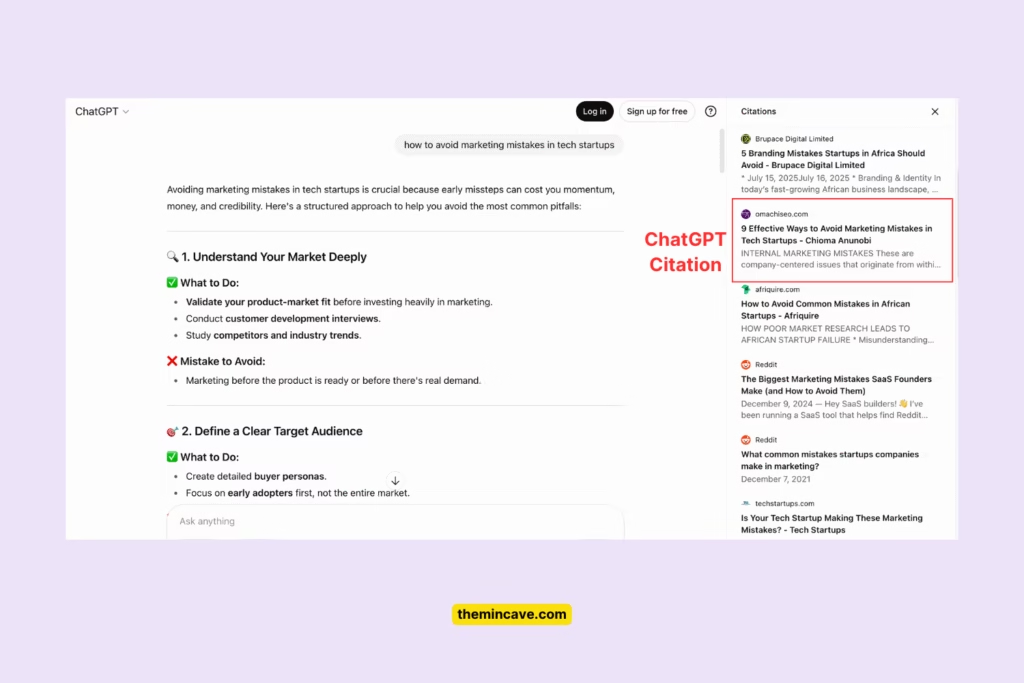
..and also picked up by ChatGPT only three days after publishing:
After publishing: What I do once the article is live
I don’t just sit back and hope people stumble on it. I treat it like a product launch: strategic and intentional. My goal is to meet people where they already are, whether that’s on social media, newsletters, or community channels. This stretches visibility far beyond what SEO alone can do, especially when you’re still building authority or don’t yet have consistent organic traffic.
Turning the article into social content
I extract key points from the article into multiple social formats tailored to each platform I’m sharing on. Like I mentioned earlier, instead of just pasting a link with “New article out! Link below”, I break the article into bite-sized sections that can stand alone.
Here’s how I approach distribution by platform:
LinkedIn:
- Turn a specific section into a mini-story or problem-solution post. This can be a carousel + caption combo or just a text-based post.
- Quote a stat or insight from the article and start a conversation around it
- Share a quick mistake or tip that leads to the full article
X / Bluesky:
- Break a section into a short thread (3–5 tweets). Twitter (X) and Bluesky are text-friendly platforms, so you can get away with not adding images or videos if you don’t have any relevant ones.
- Tweet a punchy quote or stat with the article link
- Ask a question based on the article’s topic, then add context with the article linked
Instagram / Threads:
- Design quote graphics using key statistics or tips
- Share behind-the-scenes of your information gathering process via short Reels or Stories
You can also do this for other social platforms you’re building on, just adapt the format and tone to what works there.
Here’s how I distributed an article on LinkedIn:
Sharing in community newsletters
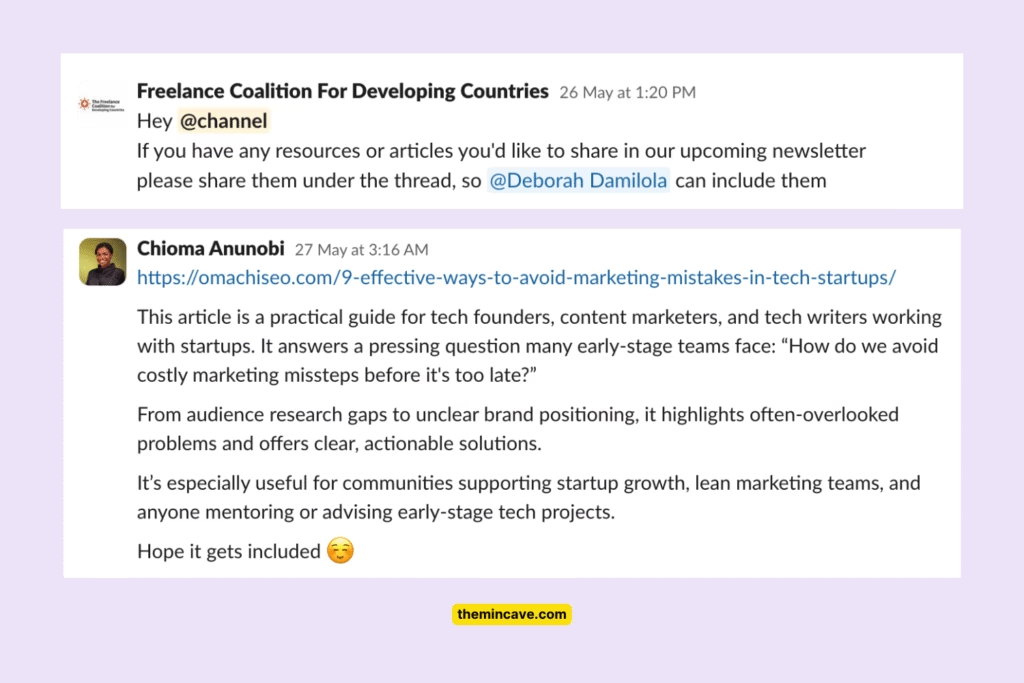
I submit to niche newsletters that get my content in front of a wider audience without needing to build an email list of my own. Communities like The FCDC and Women in Tech SEO often feature helpful resources from members in their bi-weekly or monthly roundups.
This strategy works because:
- It’s free visibility to thousands of engaged readers
- It builds authority and goodwill in niche communities that matter to your audience
Look out for Slack channels, LinkedIn communities, or websites that regularly invite members to share their recent content for newsletter features.
Here’s a sample call from The FCDC (and my response):
And one from Women in Tech SEO:
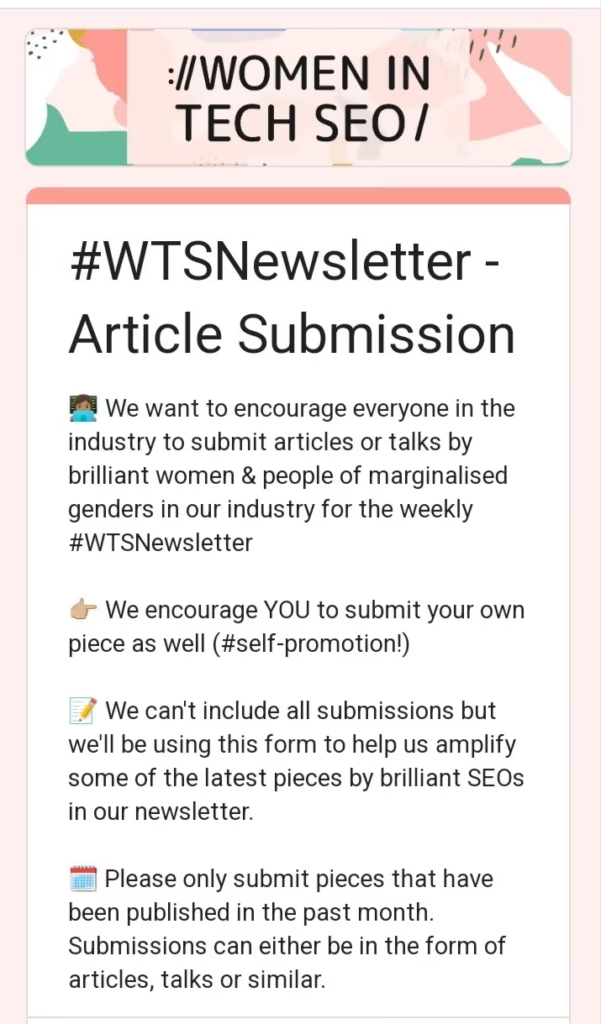
Even if you’re just starting out, your piece can still be featured because many of these communities care more about relevance and value than follower count. You just need to write an impressive pitch for your article or resource.
When your content is included, it gives you:
- A trusted referral source (subscribers already trust the curator)
- A great reason to say “My blog was just featured in X newsletter” when resharing, which increases credibility and re-engagement.
This distribution strategy not only expands your reach far beyond your current audience but also contributes back to the community by sharing useful and helpful resources.
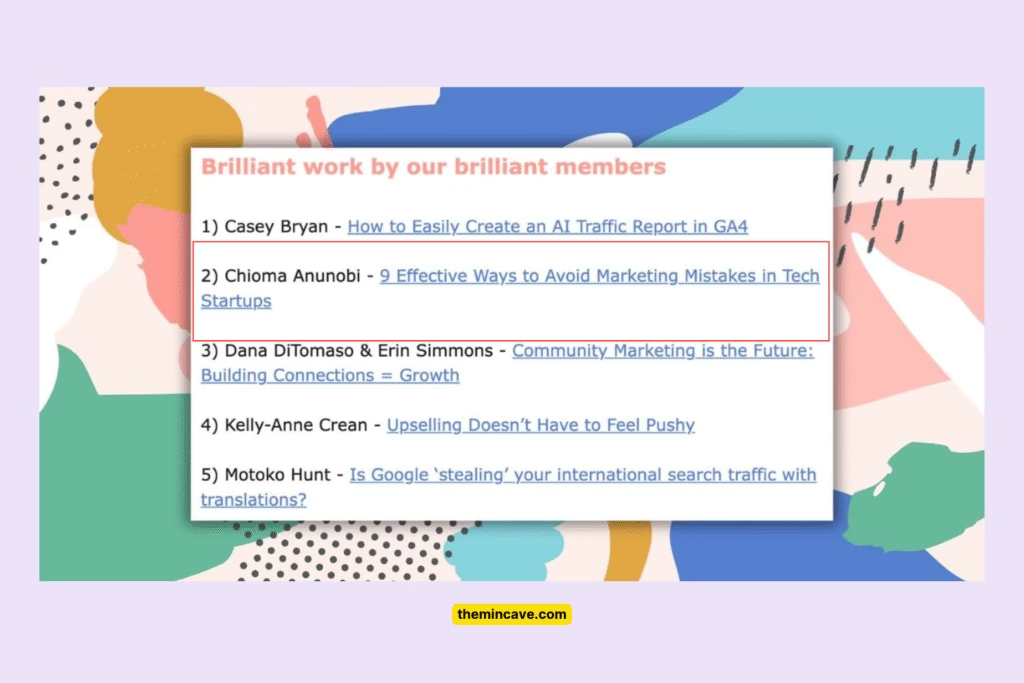
Here’s my article featured in issue #103 of The WTS Newsletter:
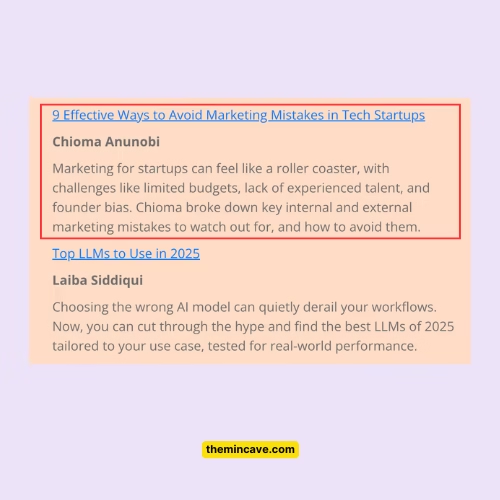
And in The FCDC’s newsletter:
Sharing in community threads
Community groups are goldmines for visibility, but how you share your content matters just as much as what you’re sharing.
You can’t just promote yourself in every community. Some have dedicated spaces or channels like #selfpromotion, #amplify-me, #promo, or #resources. Others don’t allow promotional links at all.
Check if certain rules exist before you risk getting booted out. If I find out I’m free to self-promote, I don’t just drop a link and vanish. I include texts explaining what the content is about, who it’s for, and what the reader’s takeaway is. That way, it feels more like a value-exchange instead of another annoying notification chasing clicks.
Ethical practices for promoting content in communities
Here are a few simple rules I follow (and recommend):
- Read the room. Always check the group’s rules or pinned messages before sharing anything.
- Use the right channel. Don’t post links in general or off-topic threads unless invited.
- Add context. Don’t just paste the link; write a short, friendly line to explain why it might help.
- Mention the benefit. Focus on what the post solves or teaches, not just that you wrote something.
- Engage first. If possible, contribute to other discussions before you share your work.
- Respect admins. If you’re unsure, ask before posting. It shows respect and builds trust.
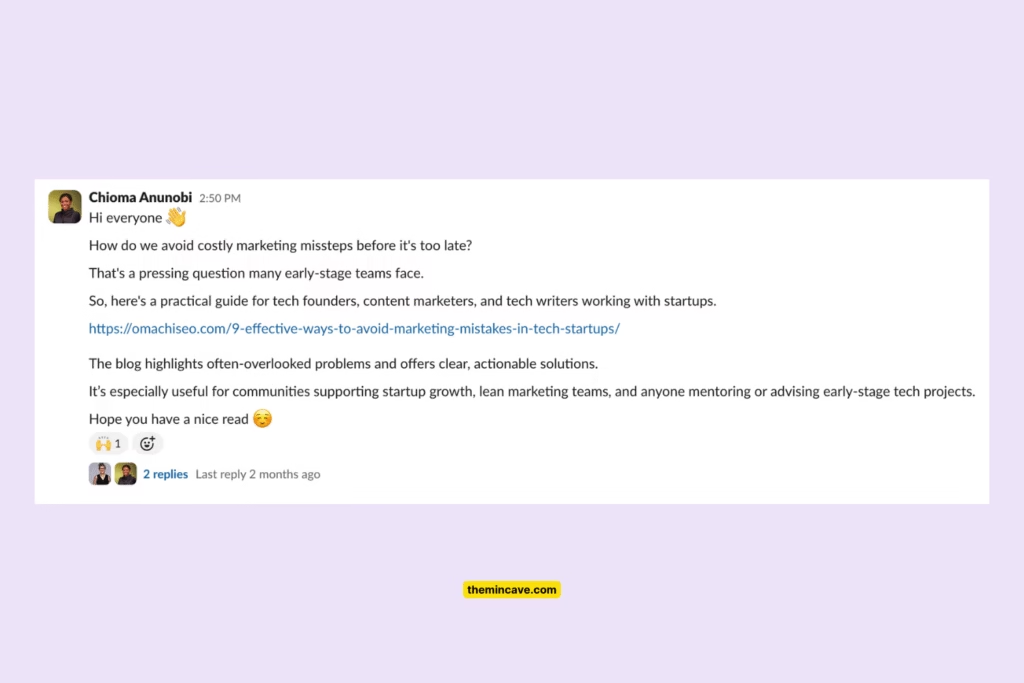
Here’s how I shared one of my articles in Women in Tech SEO’s self-promo channel:
Other content distribution strategies you can try
These are extra methods I’m still exploring, but they’re solid ways to boost your content reach, especially when you don’t have a big audience or budget. Most of them rely on smart engagement and intentional placements.
1. Cross-comment on relevant posts and online discussion forums
Leaving comments on LinkedIn, Reddit, or Twitter can position you in ongoing conversations. But the key is adding real value first. Instead of saying “Great post,” first acknowledge what the original poster shared. Then add a follow-up that includes something you’ve written elsewhere that’s relevant to the discussion.
Here’s a sample comment template:
“This was a great read! I like how you spoke about how important [topic] is to [industry]. A lot of people overlook that. Looks like we’re in sync because I also wrote about something similar recently. I covered [angle] and [angle] after observing [motivation]. Here’s the link if you’d like to give it a read: [link]”.
This strategy works because:
- It plugs your content naturally into the context of the conversation
- It gets you seen by a highly relevant audience already thinking about that topic
- Your link serves as a helpful resource, not an interruption
2. Reply to relevant questions in public threads
On LinkedIn or Slack groups, people often ask content-specific questions you’ve already answered in your article. A short helpful reply + your article link (if relevant) = smart distribution.
3. Repurpose into guest post pitches
If your article performs well, repurpose one of the core ideas into a new angle or deep dive and pitch it to platforms that are open to guest posts. You’ll build credibility and can link back to the original article where relevant.
What happens when you actually distribute your content
We’ve covered building visibility, warming up your audience before publishing, and giving your content more life after it goes live, but here’s another layer
Proper content distribution creates new opportunities for you. Real ones.
When you intentionally show up in multiple places with your content, you’re not just putting content out. You’re putting yourself out there for new connections and collaborations to find you.
Here’s what that looks like in action:
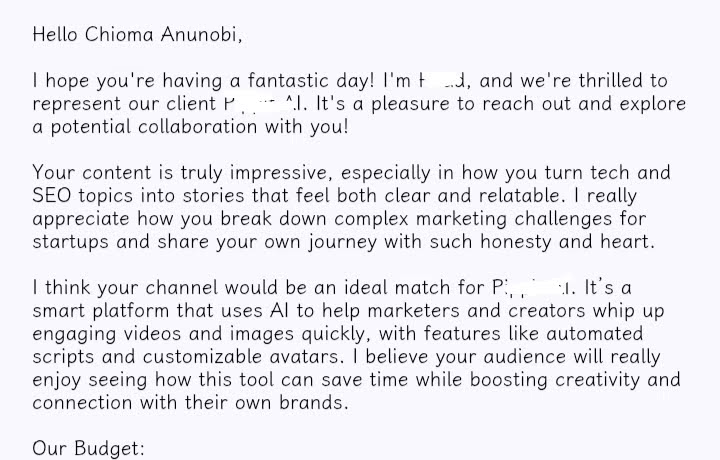
1. Opportunities showing up even when you didn’t pitch for them
Distributing my very first blog got me noticed by a brand that reached out for a partnership conversation. I didn’t cold DM or apply. I just showed up where it mattered, and the opportunity found me.
2. You attract new readers you didn’t even know were watching
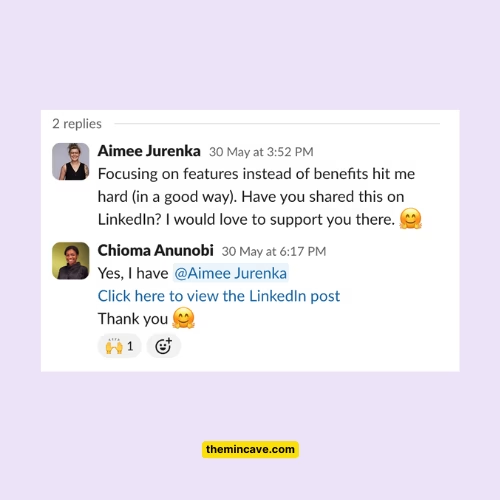
Someone might share your content with their internal team, or a comment might catch the attention of a founder or hiring manager two timelines away. These quiet shares and engagements slowly expand your reach, no ad spend needed.
Here’s a comment from after I shared my article in the #wts-amplify-me channel:
3. You start building a reputation and community around your voice
Over time, people start to associate your name with useful content. That’s how trust begins, even if your audience is still small.
Wrapping up: How I distribute my content without ads
What you do before and after you publish a blog makes all the difference. For me, visibility doesn’t come from just hitting “publish” and waiting for SEO to kick in. It comes from warming up the right people and showing my work in progress before it finally arrives.
If you’re working with limited resources or no ad budget, this distribution strategy can boost your content organically. The good thing is you don’t need to do everything at once. You can start with one or two channels where you’re already active, and build from there.
If you found this helpful, share it with someone trying to grow their visibility without paid ads. Also, if you have your own special way of distributing content that works, I’d love to learn from you. Send me a message on LinkedIn (link in my byline below), let’s swap notes.