how I increased my LinkedIn visibility as a new freelancer
I kept posting on LinkedIn. Writing tips, mostly, multiple times a week, for months. Everything I thought a new freelancer was supposed to do to build a presence.
Yet, nothing happened. It felt like I was consistently visible, but practically invisible.
Then, I changed one thing about what I posted, and people started talking back. Here’s what I did, what I got wrong and what I’d do differently if I were starting all over today.
Key takeaways:
- Posting consistently is not the same as being visible. I did the first for months and got neither engagement nor opportunities.
- Writing tips are the most commoditized content on LinkedIn. Giving the same useful advice that thousands of other people are also giving doesn’t set you apart.
- You don’t need years of experience to post something worth reading. The problem you’re solving this week is a problem someone else has right now.
why my posts weren’t getting seen
When I started out, my reason for being on LinkedIn was simple: I wanted people to know I existed and that I wrote for a living.
Success to me had an equally simple definition. If I posted consistently, the good advice would speak for itself, and someone who wanted to hire me would find me, eventually. I mean, it had happened to other freelancers, so I assumed visibility was just the accumulated result of showing up.
I was wrong.
I posted on schedule and got almost nothing back. No profile visits, comments, or offers. I would come to find that posting was just a prerequisite and not the actual strategy, and that I was missing whatever came next.
what writing tips couldn’t do
My posts were mostly writing tips, which made sense at the time. I was building my career as a writer, so writing was what I had to offer.
The problem is that everyone else wrote them too.
Every day on LinkedIn, there are new posts about writing, freelancing, personal branding, and productivity.
To be fair, most of the content is good. Great, even. But easy to write and forget. That’s exactly why it doesn’t work as a way to stand out.
A reader scrolling past my random tip had possibly already seen four versions of it that week, and mine wasn’t the one they’d remember.
The second problem took me longer to see. My posts taught people something, but they told people nothing about me. Someone could read a tip, find it useful, and come away knowing nothing about how I worked, what I was struggling with, or whether they’d want to hire me.
It felt like I was building a reputation for competence with no one attached to it.
The third problem is the one I’d underline for anyone starting out. Advice tends to end a conversation.
If I tell you to cut your first paragraph and you agree, there’s nothing left to say. But when I describe a mistake I made while editing yesterday, you have something to add. You’ve either made the same mistake yourself or learned something new for next time.
I haven’t found a study that measures this, and I’d be curious if one exists. What I can tell you is that it held every time I tested it on my own posts.
My content wasn’t giving anyone a reason to reply, and I’d been reading the silence as a reach problem when it was a content problem.
what changed when I shared from my experience
Once I understood that tips weren’t going to cut it, I started posting about my work instead.
That meant talking about things like what happened with a client that week, a rate I’d quoted badly, or what a normal Monday morning looks like when you’re freelancing, and nobody has assigned you anything.
I assumed nobody would care. I thought people followed me for what I knew, not for my personal experience or what I was ready to admit I’d botched.
Again, I was wrong.
Here’s one of my experience-led posts:
As soon as I began to write from my experience, people began to react differently to my content.
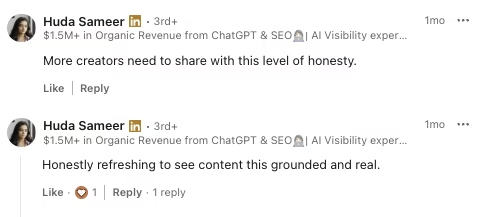
See Huda’s comment on LinkedIn
The comments changed first. Instead of only agreements, people started replying with their own version of whatever I’d described.
The conversations were easier to have because we were all talking about things that we could relate to.
I stopped caring about being an expert
One of the major changes I experienced was how I stopped feeling every post had to prove I was an expert.
There’s a particular kind of pressure in writing on LinkedIn when you’re new: you’re advising people, but you’re also well aware you’re only two years into this yourself.
Posting about what I was still figuring out removed that burden. Writing tips showed people what I could do. Writing about the work showed them who they’d be working with.
And that was enough.
Nobody just agreed. Three other writers came back with their own history with editors:
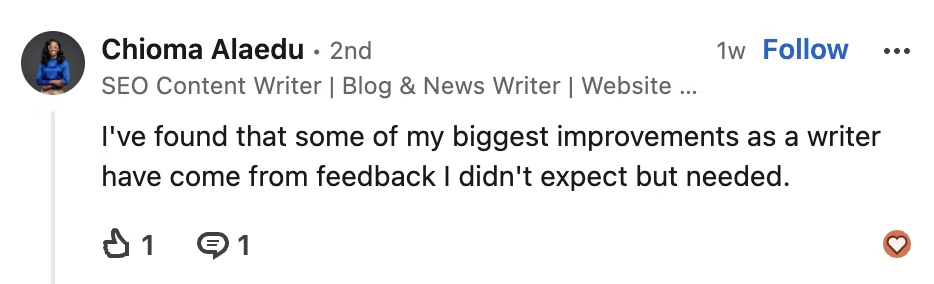
See Chioma’s comment on LinkedIn
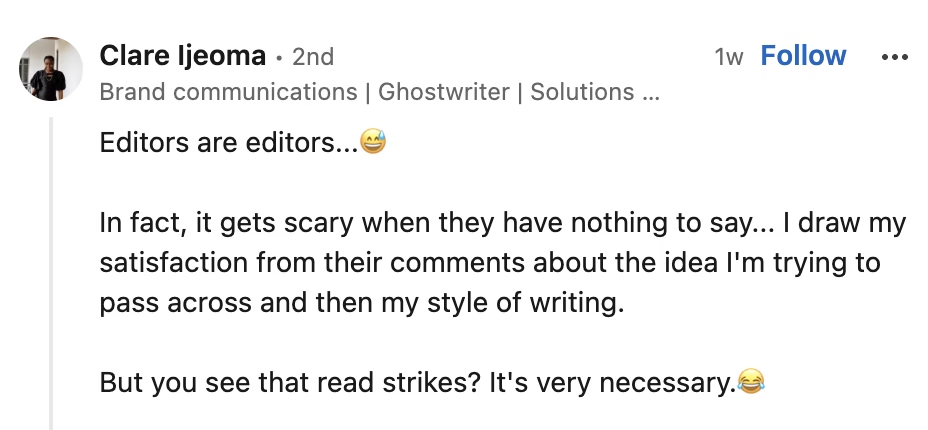
See Clare’s comment on LinkedIn
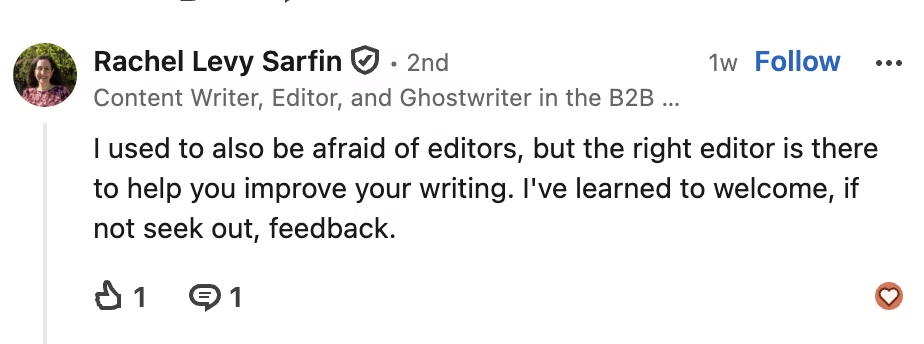
See Rachel’s comment on LinkedIn
Once I started revealing more details about myself, the content started feeling less like a tutorial and more like a dialogue that brought results on LinkedIn.
what actually improved
The change was gradual, and showed up in three places.
One, the comments got better before they got more numerous. Where I’d been getting likes and the occasional “great post,” I started getting longer, more thoughtful replies across several posts.
Here’s one example:
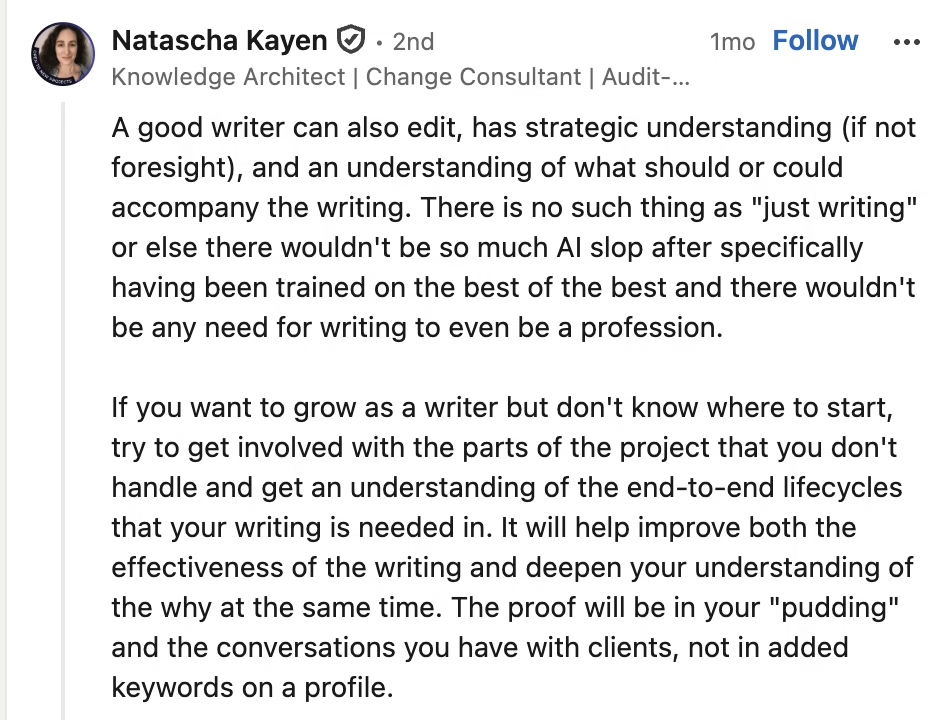
See Natascha’s comment on LinkedIn
Two, profile views followed. My profile picked up 251 views, and my posts pulled 3,642 impressions in a single week.
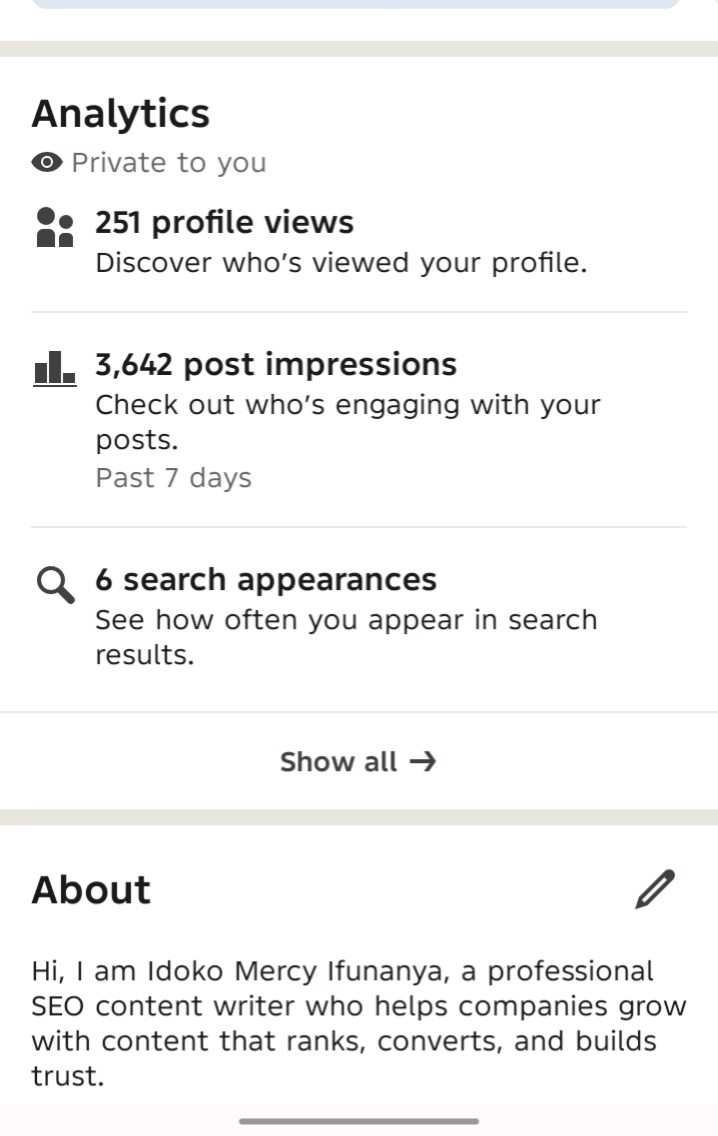
Not all posts did well, but there were clear splits. Posts that contained a personal experience outperformed those that were purely educational or instructive.
Three, the messages started. Not huge opportunities at first, but more real connections than I had ever made on the platform.
That’s when I stopped thinking about that visibility as only numbers. It’s also about the attention you get.
Being seen by a thousand people who scroll past is worth less than being read by fifty who reply.
three things I’d tell a freelancer starting now
None of these mean that you shouldn’t post tips or share educational information on LinkedIn anymore. Useful advice is still useful, and some of my posts are still exactly that. The shift was in the proportion, and in what I led with.
1. don’t wait until you’re an expert
One of the most common mistakes I see beginner freelancers make is thinking that they need to have years of practice to share anything valuable. This used to be my mindset as well.
I came to understand that what you know isn’t the only thing that helps people. They can also learn from what you’re working through as well.
The problem you are trying to solve today might be one of the problems that somebody else needs to solve as well.
2. put the story around the tip
If you are going to share advice, say where it came from.
Not “tighten your first paragraph,” but the brief where you didn’t, and what the client said. The advice survives the retelling and picks up a reason for the reader to believe it on the way.
3. let people see who’s writing
This was the real lesson. Consistency didn’t make me visible; being a person did.
You don’t have to reveal all the personal details about your life. You just have to be willing to talk about parts of your professional life that others can relate to.
start with where you are
People don’t follow content; they follow whoever’s behind it, and none of my early tips ever showed them that.
If you’re at the same stage, start with where you are and what you’re learning on the way. Not sure what that looks like in practice? Read how new freelancers can build an authentic online presence next.